What Settlement Reconciliation Actually Means
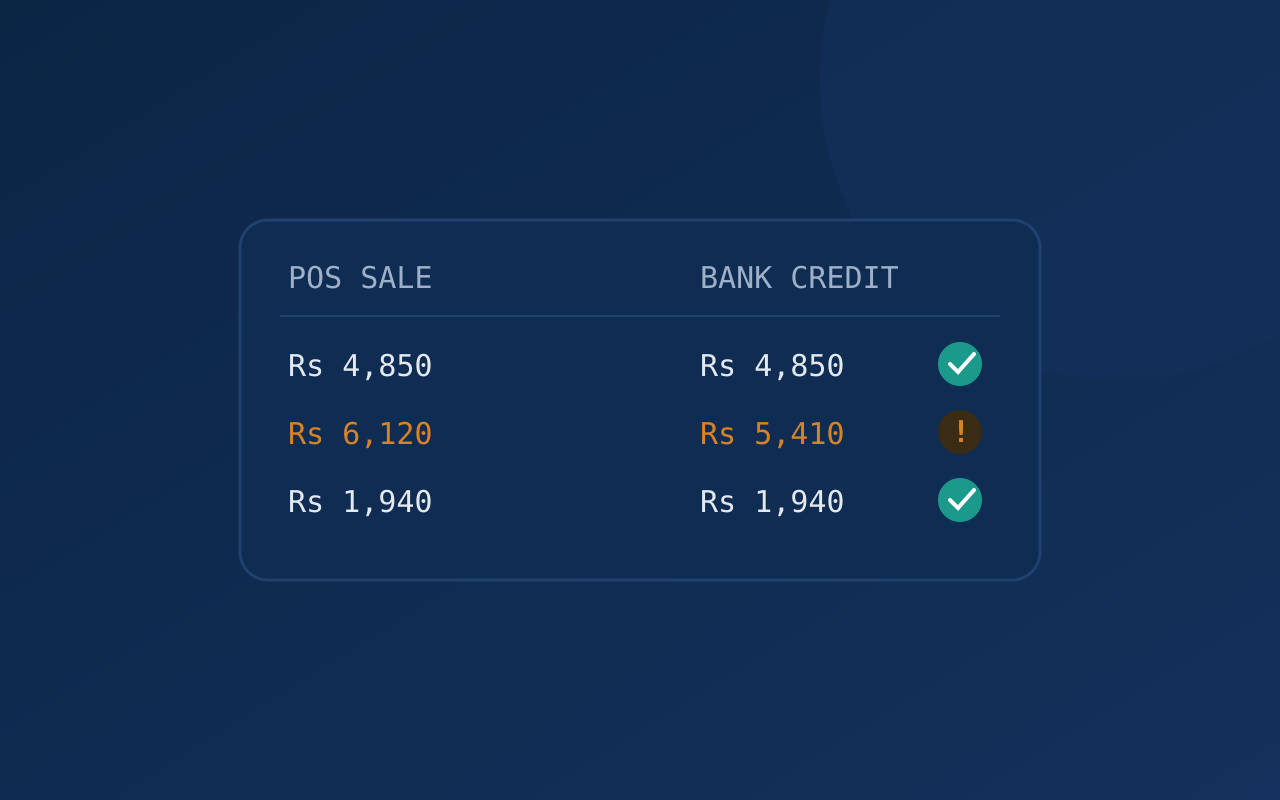
Every time a customer taps or swipes their card at your restaurant, two things are supposed to happen: your POS records a sale, and your bank credits that amount into your account — usually a day or two later. Settlement reconciliation is simply the process of checking that these two numbers actually match, line by line, every single day.
Most restaurant and cafe owners in Pakistan never do this. They glance at the bank balance once a week and assume it's roughly right. The problem is that "roughly right" can quietly cost an outlet tens of thousands of rupees a month — money that's technically owed to the business but never gets chased.
Why POS and Bank Amounts Don't Always Match
There are a handful of recurring reasons a day's card sales won't exactly match what lands in the bank:
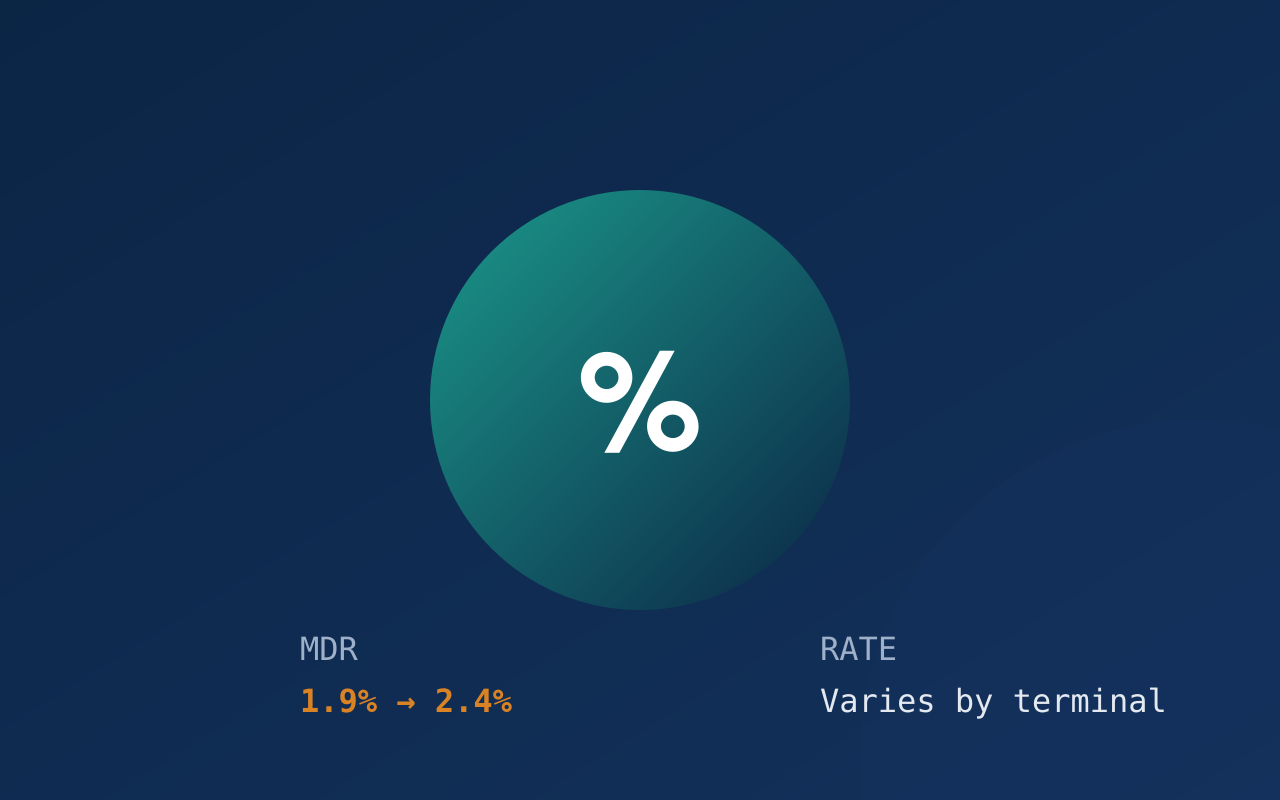
- MDR deductions — the bank or payment gateway takes a small percentage (the Merchant Discount Rate) before crediting you, and that percentage isn't always consistent across terminals.
- Delayed settlement — a Friday night's sales might not land until Monday, which makes daily balance-checking misleading if you're not tracking batches properly.
- Refunds and voids — a refunded transaction should reduce what you're owed, but if it isn't tracked, it looks like a mismatch instead of an explained difference.
- Duplicate or failed swipes — a cashier retrying a declined card can accidentally create a duplicate charge that later gets reversed, confusing the daily total.
- Batch timing — POS terminals close their "batch" at a specific time, which may not line up neatly with your restaurant's own end-of-day.
How to Reconcile Your Restaurant's Settlements, Step by Step
You don't need special software to start — a spreadsheet and daily discipline is enough to catch the biggest issues:
- Collect — pull the day's POS sales report and the bank's settlement report (most banks show this in merchant online banking or a daily SMS/email).
- Match — line up each POS batch total against the corresponding bank credit, accounting for the known MDR percentage.
- Flag — anything that doesn't match within the expected MDR range gets flagged the same day, while it's still easy to trace back to a specific shift or terminal.
- Escalate — genuine shortfalls get raised with the bank or payment gateway as a formal query, with the transaction reference numbers attached.
How Often Should You Reconcile?
Daily, ideally. Weekly reconciliation is common but makes it much harder to trace a mismatch back to its source — by the time you notice something is off, the shift, the cashier, and sometimes the transaction record itself are harder to pin down.
When to Bring In a Third-Party Audit
If you run a single outlet with low volume, doing this yourself is manageable. Once you're running multiple branches, taking delivery-app orders alongside dine-in, or simply don't have the time to check this daily, an independent reconciliation service becomes worth the cost — especially when it pays for itself through recovered shortfalls.
Not sure if your outlet has a settlement gap?
Get one week reconciled for free — dine-in and delivery payouts both included.
Book a free trial audit